You’ve decided it’s time to invest in protecting your vehicle. But when you start researching, you hit a wall of terminology: paint correction, ceramic coating, paint protection film. What does your car actually need – and in what order?
Here’s a straightforward breakdown from the team at CAR & AIR in Marietta, GA, where we work on everything from daily drivers to six-figure exotics.
What Is Paint Correction?
Paint correction is the process of removing imperfections from your vehicle’s clear coat – swirl marks, light scratches, water spot etching, and oxidation that build up over time from washing, parking, and everyday use.
Common paint defects that correction addresses:
- Swirl marks from automated car washes
- Fine scratches from improper hand washing
- Water spot etching from sprinklers or rain on hot paint
- Light oxidation on older or sun-exposed paint
- Buffer trails from previous detailing work
The correction process uses machine polishers and a series of compounds and polishes to cut and refine the clear coat until the defects are removed — or minimized as much as possible without going through the clear coat.
Key point: Paint correction does not add protection. It restores. Once the work is done, your paint is in the best condition it’s been since the factory – but it’s also exposed. That’s where ceramic coating comes in.
What Is Ceramic Coating?
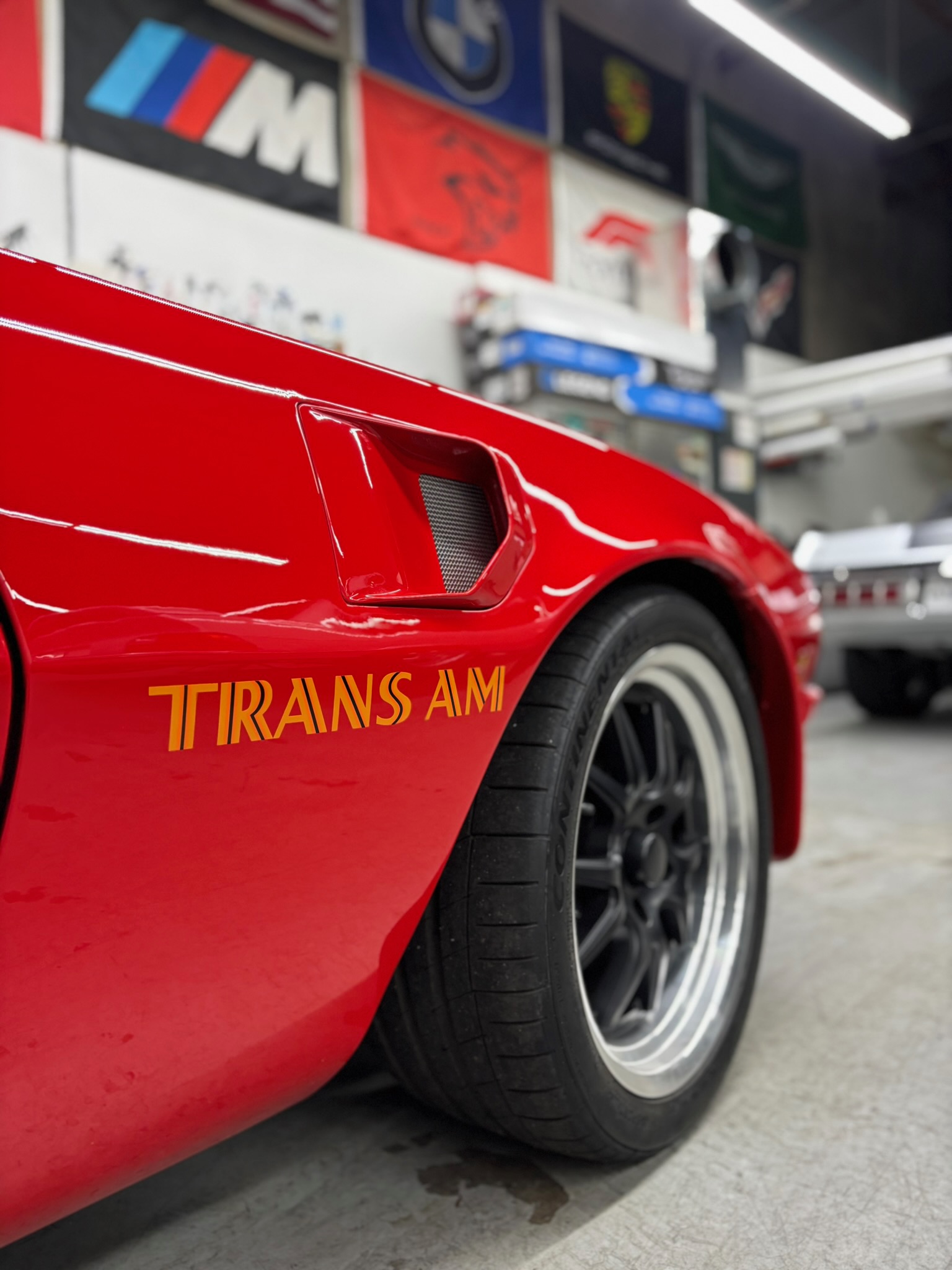
Ceramic coating is a liquid polymer applied to the exterior of a vehicle that bonds chemically with the factory paint, creating a hard, semi-permanent protective layer. At CAR & AIR, we apply Gtechniq Crystal Serum Ultra – one of the most durable coatings available on the market, used on vehicles where the finish actually matters.
What ceramic coating protects against:
- UV oxidation and paint fade
- Chemical contaminants (bird droppings, tree sap, road chemicals)
- Light swirl marks and minor surface scratches
- Water spotting — hydrophobic properties cause water to bead and roll off
- Brake dust and road film buildup
Ceramic coating also dramatically reduces washing time and keeps the vehicle looking cleaner, longer. For high-end vehicles in Georgia’s climate — where UV index is high, pollen season is aggressive, and summer heat accelerates chemical bonding — this protection is not optional. It’s practical.
So Which Comes First?
Almost always: paint correction first, then ceramic coating.
Ceramic coating locks in whatever condition the paint is in at the time of application. If you coat over swirled, scratched, or oxidized paint, you’ve permanently sealed those defects under a hardened layer. Getting them out afterward requires stripping the coating entirely and starting over — an expensive and avoidable mistake.
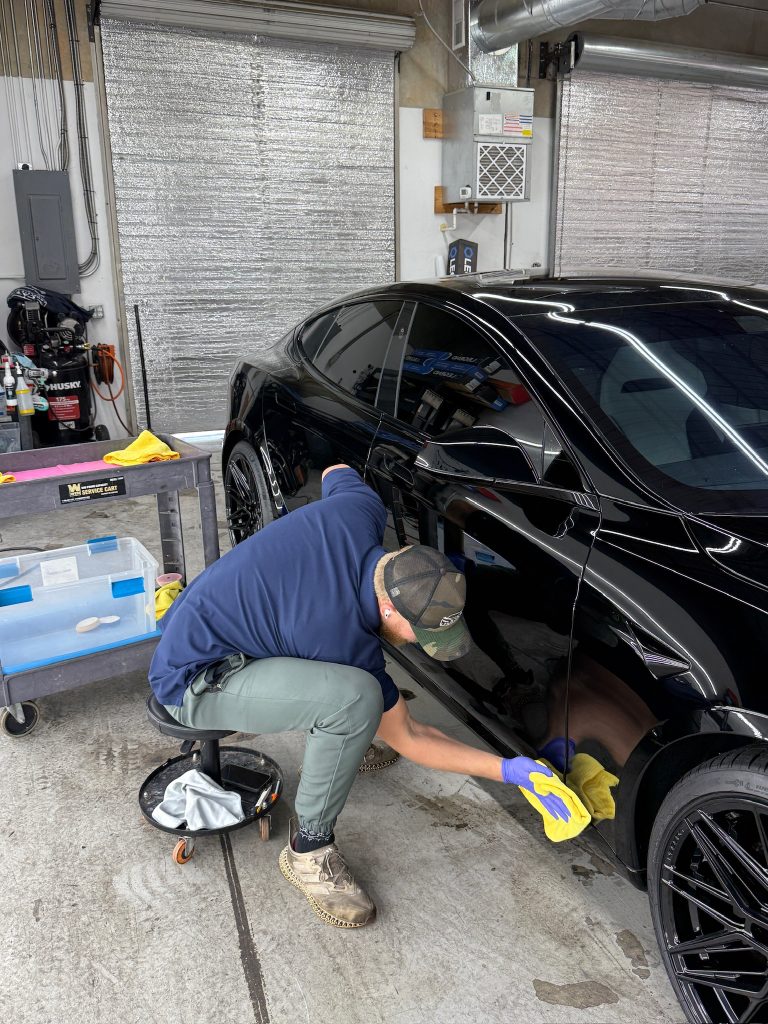
The correct sequence: thorough decontamination wash, paint correction to the desired level, then ceramic coating applied to a clean, corrected surface. That’s the process we follow on every vehicle we touch at CAR & AIR.
What If My Car Doesn’t Need Correction?
Brand-new vehicles or recently detailed cars may need only minimal paint prep before coating. In those cases, a decontamination wash, clay bar treatment, and light polish may be sufficient before applying ceramic. We assess every vehicle individually before recommending a correction level.
If you’re purchasing a new vehicle, the window between delivery and first exposure to road contaminants is the ideal time to coat. Many of our clients book a ceramic coating appointment the same week they take delivery.
Ready to Book?
CAR & AIR serves clients across the Atlanta metro — Marietta, Buckhead, Alpharetta, Johns Creek, Milton, and beyond. If you’re ready to protect your investment the right way, call us to book an appointment.
Book An AppointmentComplete Auto Reconditioning & Aircraft Intensive Reconditioning
1400 S Marietta Pkwy SE #204, Marietta, GA 30067
770-310-6527